The Simple Beginner’s Guide To Beekeeping in 2023

If you find yourself looking for a way to learn more about nature, have some thrills and get out into the natural environment more often, look no further.
Beekeeping is the ideal hobby that combines all those things and more!
As a beekeeper, you have a rare opportunity to be involved in an activity that few people on the planet actually get to experience, you get to spend a lot of time outside in nature and you can contribute to conservation in a small (okay, large) way.
When we started beekeeping, we didn’t realise just how much of a door into the natural world it open for us. Once we learned the basics, it naturally evolved into a broader spectrum of information, we never realised we’d need, or find interesting.
As you begin your journey as a beekeeper, you will likely experience this same sense of awe and wonder, as you begin to delve deeper into the methods of establishing healthy, thriving hives.
But before we get side-tracked with all of that, let’s get you started so you can also experience the pleasure and fulfilment of being a beekeeper.
This is a rather meaty tutorial, so I’ve created a list of contents for your convenience.
What is Beekeeping?
Beekeeping, also called Apiculture, is an occupation that involves growing and managing bees for pollination, honey and other bee products.
It can be done solely as a hobby where you keep a couple of hives for enjoyment or as a business where you own up to thousands of hives and offer pollination services, sell colonies and bee products on a commercial scale.
Beekeepers can help increase bee numbers creating safe areas for them to live, feeding them during dearth periods, managing pests and bringing awareness and information into their communities surrounding the role and importance of bees in our world.
Why is beekeeping important?
There is a concern globally that bees and other pollinators are under threat. There are many factors that contribute to this concern. Although studies have found that honey bee populations aren’t endangered yet, there are other solitary bees that are close to extinct and under threat.
In an effort to prevent the further demise, and possible demise of these crucial insects, beekeepers have the opportunity to make a difference.
By implementing sound hive and apiary management styles, beekeepers can create an oasis for bees and other pollinating insects. We also have the added benefit of a global awareness surrounding the importance of our bees. This allows even the most city-bound beekeeper novice to find a place to keep their hives as urban beekeeping rises in popularity.
How to get started with Beekeeping?
If you’ve ever started anything you know the sheer amount of information can be enough to put you off. I’m going to attempt to make this as short and sweet as possible, while still being as helpful to you as possible. This may not be the most traditional way to get started, but I’m nothing if not a non-conformist. I believe doing is the best way to learn.
Disclosure: Please make sure you are not allergic to bees before you get started. I would hate for your experience to be cut short by something that can be prevented.
First things first – A colony to start your apiary
You can’t be a beekeeper without actually having bees. Here are a few ways you can get hold of your first swarm. Remember, you will need a secure place to keep your bees where they will not be harmed, or cause harm to passer’s by.
- Trap a swarm – cheapest way, can take time
- Buy a swarm – can be expensive, but allows instant gratification
- Do an extraction of a swarm in an inconvenient place – you may need to enlist the help of a beekeeper, and will require the necessary protective clothing
- Do a split of an existing swarm – if you know someone who keeps bees, you may ask them to perform a colony split
You may wonder why I didn’t start you off with gear first. The short answer is that to get a swarm you don’t really need the gear first.
Swarms can be closed into their hive boxes and transported at night with relative safety. Of course, things can go awry and accidents do happen, but for the most part, suits can wait a little bit.
Second – Suit up!
To save you time and money, here is a list of the basics you need. Anything beyond this list is fluff that you may choose to get if you like.
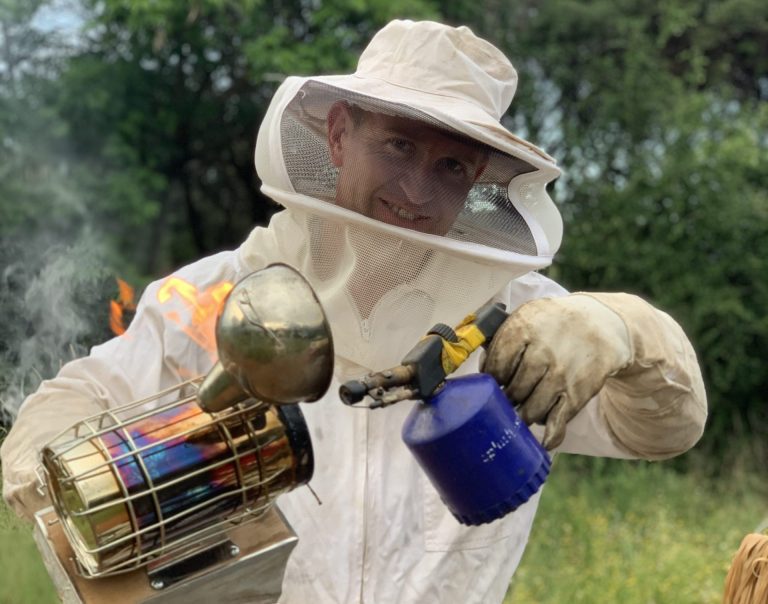
- A bee suit – depending where you are you may want to get a ventilated suit or a simple jacket with a veil, or just a veil. Here in SA we use the traditional full-body coveralls with the cricketer’s hat veil
- Gloves – definitely a must with SA bees, optional in other places
- Boots – also a must for SA bees, optional in the other places
- Hive tool – the most used piece of equipment in our business!
- Smoker – essential for calming defensive bees
- Bee brush – the best and safest way to clean bees off frames
For a more in-depth look at the equipment you need, have a look at this article for the 6 essential tools the beginner beekeeper needs.
Third – Get out and do it!
I’m sure I’m not the only one who has gone through the thrill of getting all the information and kit ready to start a new project, and then due to uncertainty or insecurity I put off getting started. And then a year later look at all the kit gathering dust as it waits for me to take action.
Yes, going near a hive can be incredibly intimidating. And yes, you will get stung.
Those are not excuses to not do it. Remind yourself that you have your suit and your smoker. You are prepared, and you can always back off if you need to.
The reward for seeing it through is so incredible, the reasons to not do it soon fade. So get out there, and get to know your bees and marvel at the incredible creatures they are. You may even get to enjoy some honey as a sweet bonus!
Tips for success in beekeeping
- Do your homework! I know, homework is a drag, but lucky for us, YouTube exists. Read up and watch as many tutorials as you can. You can learn so much from the people who’ve gone before you. Have a look at this list of my 3 favourite beekeepers to follow (all on YouTube)
- Have a checklist of what you need and what you want to do before you go out to the apiary
- Keep records from the beginning. This is not the most exciting part, but it definitely helps you keep track of what’s happening in your hives.
- Get the Blue Book of Beekeeping in South Africa by MF Johansmeyer. It’s not the most colourful book out there, but it has the best information for keeping bees!
- Don’t be scared to make a mistake. Learning happens best through trial and error. You will make mistakes, so please give yourself grace and grab hold of the lesson before your move on.
- Have fun!
Frequently Asked Questions
The last thing you need to know about beekeeping
- Beekeeping is a great hobby (or even career) for anyone looking for an excuse to get out of the house or for something a bit more thrilling than knitting.
- It is not difficult, nor does it have to be expensive to get started. Make use of the beekeeping community in your area to learn and save on costs as you get started.
- If you take care of your bees, they will take care of you.
- Have fun! This is truly the most fun you can have with a suit on!