How To Embed A Wax Foundation Strip Into A Frame
Embedding wax foundation strip in a frame is a process used in beekeeping to create a foundation for bees to build their honeycomb. Here we’ll have a look at the options available to you, and the process we follow at Kingdom Bees.
The Down Low On Wax Foundations
A wax foundation is exactly what it sounds like: a foundation of wax for your bees to build on.
Now, any amount of Googling will leave you with the question which do I choose?
There are a few different opinions that can cause a lot of confusion for newbies, and some healthy debating among beekeepers.
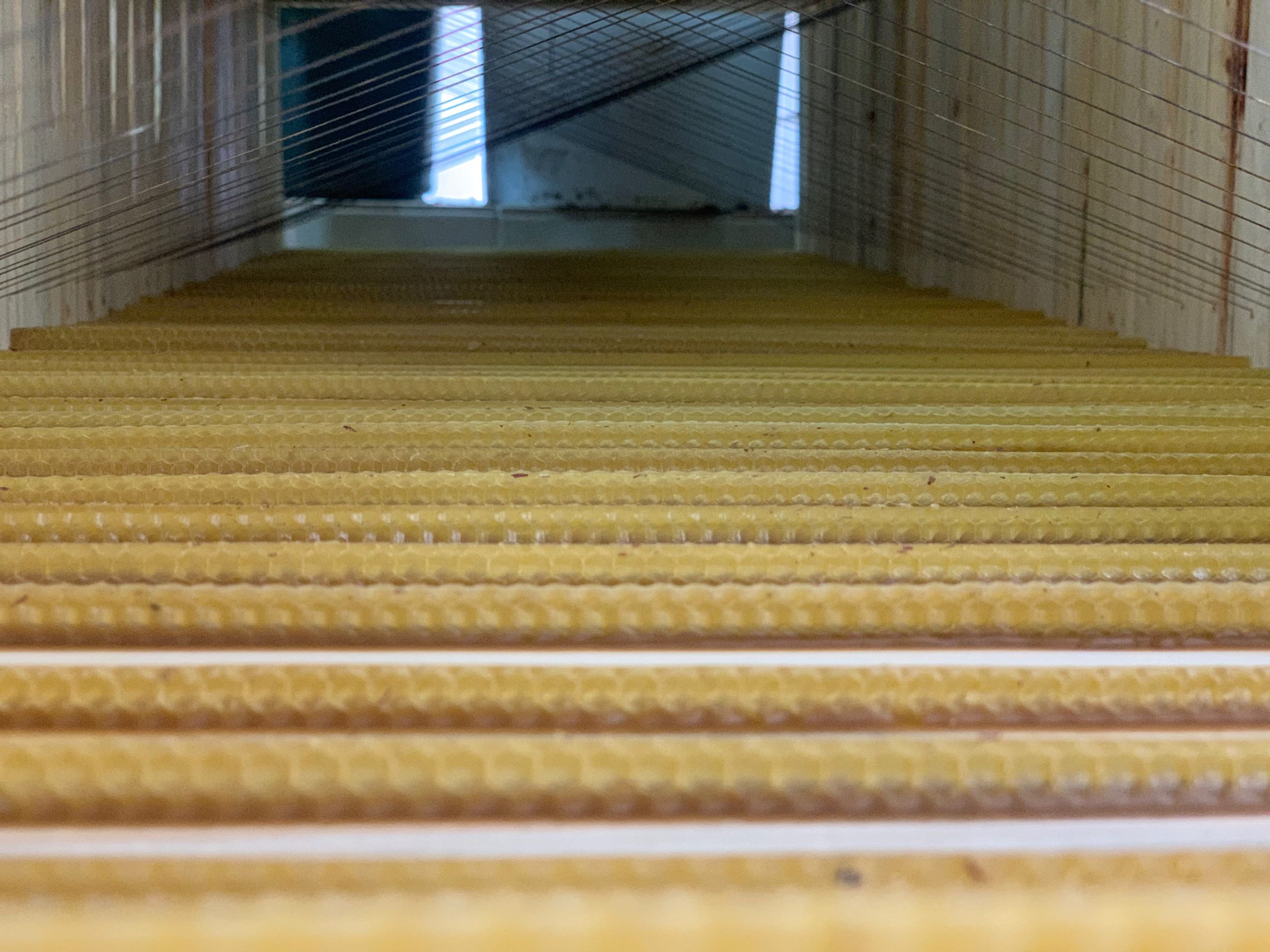
Personally, we prefer a narrow strip of beeswax foundation across the top of the frame.
Depending on your needs, use for the harvested wax (later) and funds available, you can go with the option that’ll work best for you.
I’ll give you some insight into what I’ve seen done, with pros and cons and also explain the process we use at Kingdom Bees as well.
Types of Foundation Strips
| Method | Pro | Con |
| Full wax foundation | Saves bees some work, easy to implement, does not have to be indented with honeycomb shape (ie the bees can build on smooth sheets) | Costly, uses a lot of material, not necessary for bees to build straight |
| Plastic foundation | Can be used season after season, can be built into the frame, allows for harvesting all the wax that bees produce, forms a sturdy base that won’t break during harvesting | Bees may reject it and not build comb on it, has to be dipped in beeswax in an effort to overcome bees rejecting it, concerns about plastic and environmental pollution, must be food safe plastic |
| Partial foundation (Strips of roughly 0,5-1cm thick across the top bar) | Can be beeswax or plastic. Bees will use it as a guide and build comb to follow the strip. Uses less material. Most cost effective, with favourable results of straight honeycomb. | If the hive gets very hot, the strips may fall out if not embedded properly causing bees to cross build. |
| No foundation | No material cost. | Bees will cross-build making honey harvest very difficult & wasteful. |
The Wax Foundation Method Used at Kingdom Bees
Over the years we have tried a few different methods of preparing frames with wax foundations. We’ve settled on using partial strips of homemade or bought foundation sheets that we embed with melted beeswax.
The end result is a strip of approximately 0.5cm wax across the top of the frame that sits firmly in the groove of the frame. The bees have a guide to work on and build straight virgin comb to fill the frame. This makes harvesting honey a breeze.
Steps For Embedding Wax Foundations Into Frames

You will need:
- wax foundation sheets (You can choose to make your own sheets of wax foundation, or use purchased ones. We use both depending on the season and the availability of our own wax.)
- A knife (sharp, smooth blade)
- A ruler (or other straight cutting guide)
- Extra beeswax, melted in a pot over low heat
- A syringe
- Frames with foundation grooves, leaned of any debris
Step 1
Firstly, melt your beeswax and keep it warm over low heat. Preferably on a gas burner in the garage or outside in a netted area to avoid mess and bees bothering you.

Step 2
In the meantime, cut your foundation sheets length-wise into strips of roughly 1cm in width.

Step 3
Turn your frame upside down and place a strip into the groove in the top bar of the frame.

Step 4
Using the syringe, draw up melted wax. Slowly & steadily eject the melted wax along either side of the foundation strip to secure it in place.

Step 5
Stack your frames upside down to allow the wax to set. Once it has firmed up, you can place the frames into their box.

What’s Next?
Now that you have your frames ready with the wax foundation strips securely in place, you can begin using the brood or super box.
If you’d like to learn about baiting the box to catch a colony, you can do so by following the section on attracting a colony of bees in this post.
Or if you’re ready to super your active colony, by all means have a look at this post on preparing for the nectar flow.
Meanwhile, should you have any questions for us, feel free to leave a comment, or send us a message via the contact form.
Until next time, happy beekeeping!
Morgan & Louise